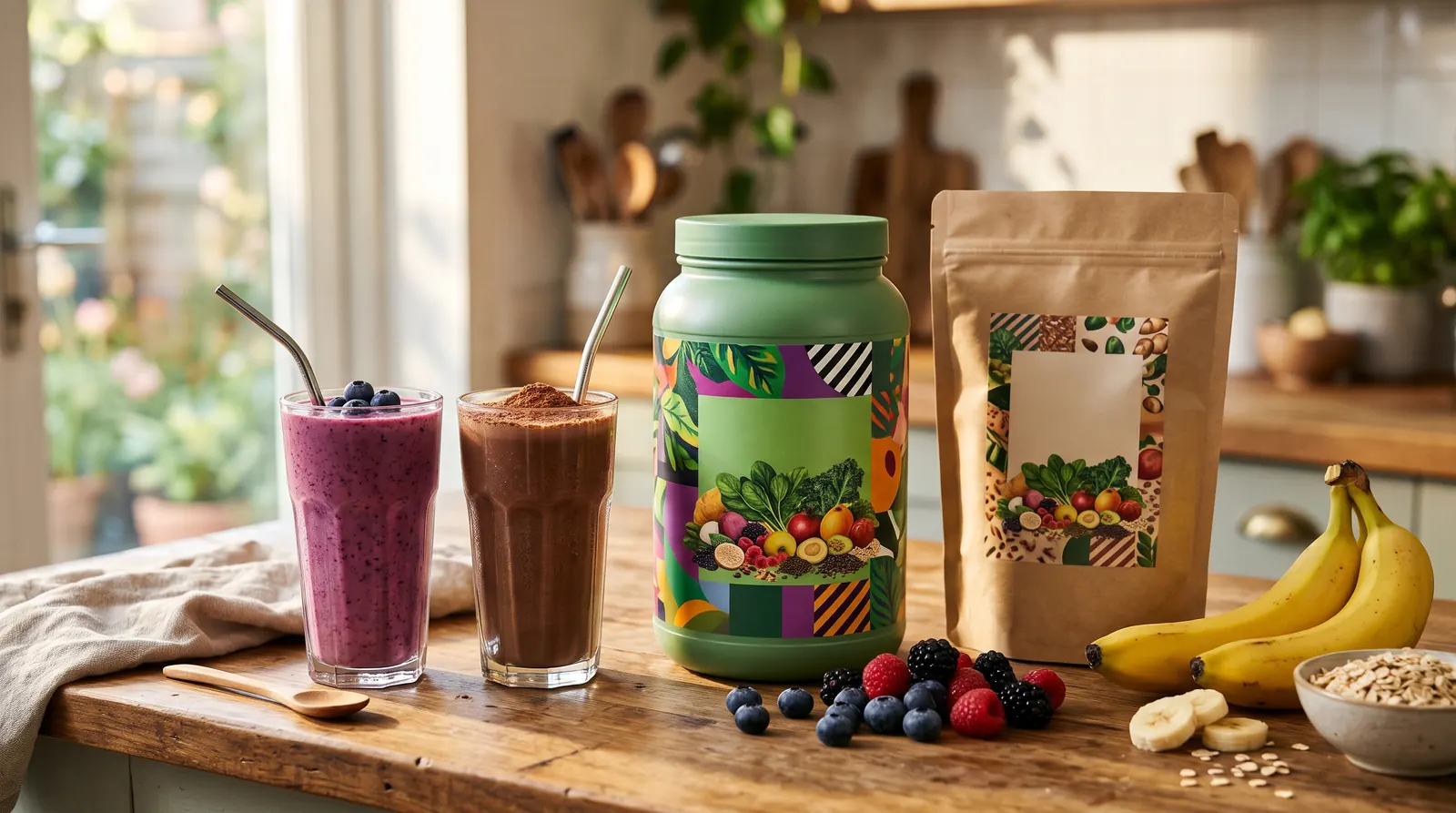
A recovery shake can supply protein, carbohydrate, and fluid when a full meal is not convenient. Plant powders make that easy without dairy, but powder alone does not replace enough food, sleep, or hydration. Build the drink around the length of the workout and the next meal.
Protein, carbohydrate, and fluid after training
Resistance training creates a reason for the body to repair muscle, and dietary protein provides amino acids used in that process. A shake is useful when it makes enough protein easier to eat across the day. It is not required after every session if a protein-containing meal is already close by.
Carbohydrate replenishes fuel used during lifting, running, cycling, or team practice. Fruit, oats, and plant milk can turn a powder-and-water drink into a more complete recovery option. After a short easy session, the next balanced meal may provide all the carbohydrate needed without adding several shake ingredients.
Fluid matters when training leaves you thirsty or sweaty. Water and plant milk both contribute. Add a small pinch of salt only when it fits the workout, climate, and rest of the diet; a routine gym session does not automatically require a specialized electrolyte mixture.
Pea, soy, rice, hemp, and blended powders
| Protein source | Texture and nutrition notes | Who may prefer it |
|---|---|---|
| Pea | Thick texture and a mild earthy flavor | People avoiding dairy and soy |
| Soy | Complete amino acid profile and creamy mixing | Those comfortable eating soy |
| Rice | Lighter body but sometimes gritty | Users blending it with another plant protein |
| Hemp | Nutty taste with more fiber than isolates | Whole-food-style shakes |
| Plant blend | Combines sources to balance amino acids and texture | Anyone who dislikes a single-source powder |
Blends often pair pea with rice because their amino acid patterns complement one another. Soy is already a complete plant protein. Hemp contributes protein but usually brings more fiber and a stronger flavor, so it may be easier to use with cocoa, berries, or nut butter.
Choose an unflavored powder when you want control over sweetness and recipes. Flavored products save preparation time but may include gums, sugar alcohols, or high-intensity sweeteners. The better choice is the ingredient list your stomach tolerates and the flavor you will actually finish.
How to build a recovery shake
Start with water or an unsweetened plant milk. Add one labeled serving of protein powder, then choose a carbohydrate based on training demand. A banana blends smoothly, frozen fruit thickens the drink, and rolled oats add a more substantial texture. Nut or seed butter adds fat and energy but can make a shake sit heavier before the next activity.
Use a blender for oats, dates, frozen fruit, tofu, or nut butter. A shaker bottle works for powder and liquid, especially when the powder contains a mixing aid. Pour liquid first, add powder second, and shake promptly so dry clumps do not collect in the bottom corners.
Five specific plant-based shake recipes
Banana oat recovery shake
Blend one banana, one serving vanilla pea-and-rice protein, one cup soy milk, one-quarter cup rolled oats, cinnamon, and ice. This thicker shake suits a demanding morning lift when breakfast needs both protein and carbohydrate.
Berry soy smoothie
Combine one cup frozen mixed berries, one serving plain soy protein, one cup oat milk, one tablespoon ground flaxseed, and enough water to blend. The berries cover the plain powder flavor, while flax adds texture and fat.
Chocolate peanut shake
Blend one serving chocolate plant protein, one cup soy milk, one tablespoon peanut butter, half a frozen banana, and ice. Use less peanut butter when you want a lighter drink before a meal.
Mango ginger pea shake
Use one cup frozen mango, one serving unflavored pea protein, one cup coconut beverage, a small piece of fresh ginger, and lime juice. Choose a carton coconut beverage rather than canned coconut milk when a thinner consistency is preferred.
Cherry cocoa hemp blend
Blend one cup frozen cherries, one serving pea protein, two tablespoons hemp hearts, one teaspoon cocoa powder, one cup almond milk, and water as needed. The cherries and cocoa pair with hemp's nutty flavor.
Timing the shake and reading the label
Drink the shake within the same general meal window you would normally use after training. Total daily protein and enough overall food matter more than racing to finish a blender within minutes of the last set. If dinner is soon, make the shake smaller or eat the meal instead.
Check protein per labeled scoop, then confirm how large that scoop is. Compare the number of servings with the actual container weight. Read added sugar separately from total carbohydrate, and scan for allergens such as soy, peanuts, tree nuts, or ingredients processed on shared equipment.
Athletes subject to drug testing can look for independent seals such as NSF Certified for Sport or Informed Choice. A seal addresses manufacturing and screening criteria specified by that program; it does not prove that the powder builds more muscle than another protein.
Reducing bloating, grit, and stomach discomfort
Begin with half a serving if a new powder contains a large amount of fiber, gums, inulin, or sugar alcohols. Sip rather than chug, and avoid combining every high-fiber ingredient in one drink. A shake with pea powder, oats, flax, berries, and nut butter can be much harder to digest than powder, banana, and soy milk.
For a smoother texture, blend liquid and powder first, then add frozen ingredients. More liquid reduces chalkiness. If soy causes symptoms, try pea and rice; if pea feels heavy, compare a soy isolate or a lower-fiber blend. Stop using any product that causes signs of an allergic reaction and seek appropriate care.
More detail is available in the vegan powder selection guide, protein planning for sports, and the plant-versus-animal protein comparison.
Frequently asked questions
Do I need a plant protein shake after every workout?
No. A meal with enough protein and carbohydrate can handle recovery just as well.
Which plant protein mixes most smoothly?
Soy and blended powders often mix creamier, while rice and hemp may retain more grit.
Should a recovery shake contain fruit?
Fruit is useful when you want carbohydrate, flavor, fluid, and a thicker texture.
Can I prepare a shake ahead of time?
Yes. Refrigerate it promptly, shake it again before drinking, and follow safe storage for every ingredient.
Bottom line
A useful plant-based recovery shake combines a tolerated protein with enough carbohydrate and fluid for the session. Pea, soy, rice, hemp, and blends can all fit. Keep recipes simple enough to digest, and let the rest of the day’s meals carry most of the nutrition.